
Understanding the Linux Kernel (3rd Edition): Complete Guide
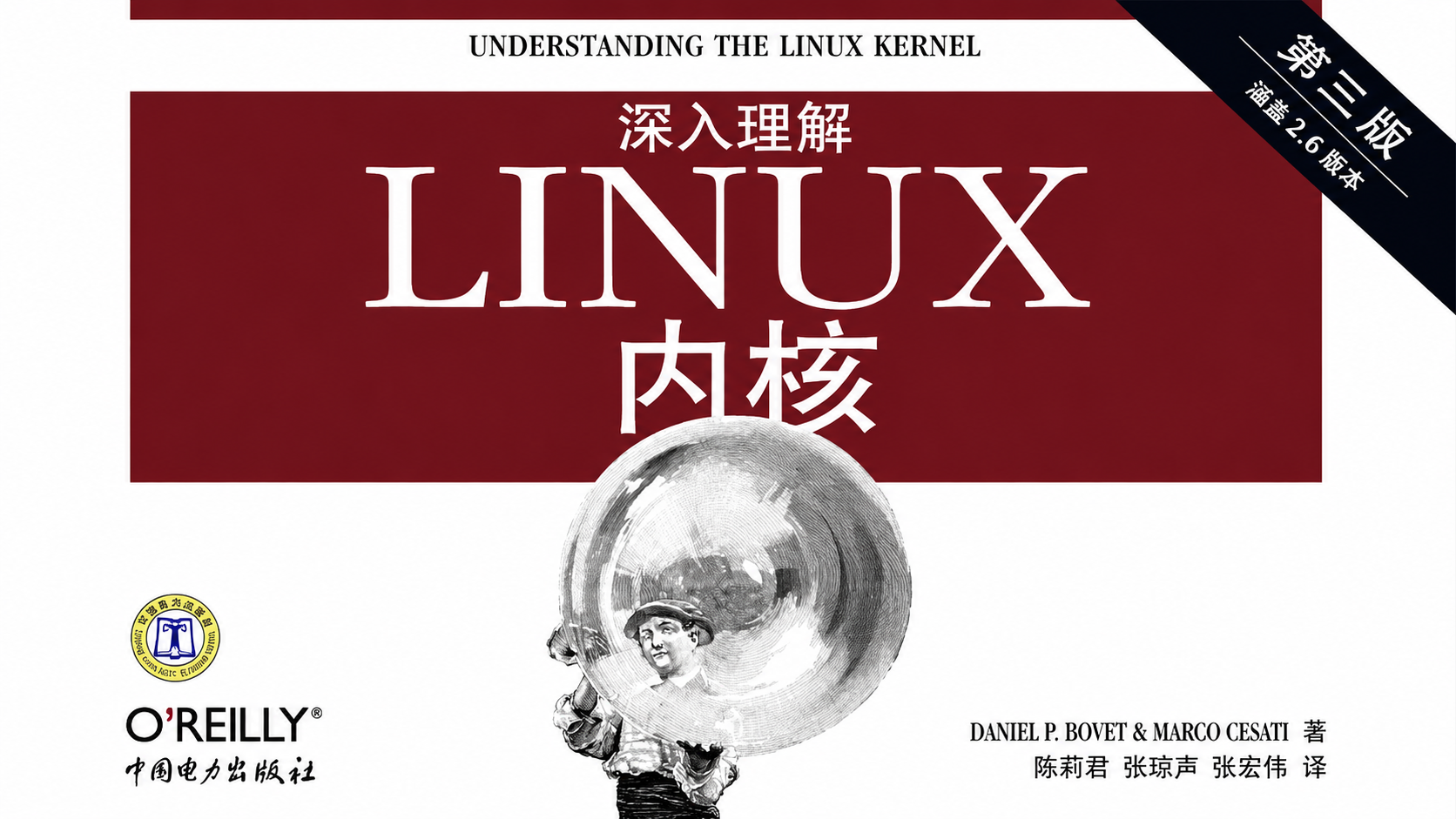
Understanding the Linux Kernel (3rd Edition) is widely regarded as one of the most authoritative references on Linux kernel internals. Written by Daniel P. Bovet and Marco Cesati, the book provides a systematic exploration of the design principles, data structures, algorithms, and implementation details that power the Linux operating system.
Rather than focusing solely on source code walkthroughs, the authors explain the architectural decisions behind Linux’s design, helping readers understand not only how the kernel works but also why it works the way it does. Although the book centers on the Linux 2.6 kernel and the x86 architecture, many of its concepts remain fundamental to modern Linux systems.
📖 Book Overview #
The Linux kernel serves as the bridge between hardware and software, coordinating CPU scheduling, memory management, file systems, device communication, and process execution. Understanding these mechanisms is essential for developers working on operating systems, device drivers, embedded systems, performance engineering, or low-level application development.
This book delivers an in-depth examination of:
- Kernel architecture and design philosophy
- Process and thread management
- Memory management subsystems
- Virtual File System (VFS) architecture
- Interrupt and exception handling
- Device driver infrastructure
- Process scheduling and synchronization
- Interprocess communication (IPC)
- Timekeeping and timer management
A major focus of the third edition is the Linux 2.6 kernel, which introduced significant redesigns across memory management, scheduling, scalability, and the block I/O subsystem.
🏗️ Technical Metadata #
| Attribute | Details |
|---|---|
| Title | Understanding the Linux Kernel (3rd Edition) |
| Original Authors | Daniel P. Bovet, Marco Cesati |
| Translators | Chen Lijun, Zhang Qiongsheng, Zhang Hongwei |
| Publisher | O’Reilly Media (Original Edition) |
| Chinese Publisher | China Electric Power Press |
| Publication Date | October 2007 |
| ISBN | 9787508353944 |
| Kernel Version Covered | Linux 2.6 |
| Target Audience | Kernel developers, system programmers, security researchers, advanced Linux users |
🚀 Core Topics Covered #
Process Management and Scheduling #
The book provides a detailed examination of Linux process management, from process creation to termination.
Key topics include:
- Process descriptors (
task_struct) - Process creation via
fork() - Kernel threads
- Context switching
- Scheduler internals
- Run queues
- Scheduling classes
- The Completely Fair Scheduler (CFS)
Readers gain insight into how Linux balances responsiveness, fairness, and throughput across diverse workloads.
Memory Management #
Memory management is one of the most complex and critical areas of the Linux kernel.
The book explores:
- Virtual memory architecture
- Physical memory organization
- Page frame allocation
- Slab allocator design
- Demand paging
- Page cache
- Swapping mechanisms
- Direct Memory Access (DMA)
- NUMA considerations
The authors carefully explain how Linux efficiently utilizes memory while maintaining high performance under varying system loads.
Virtual File System (VFS) #
The Virtual File System layer provides a unified abstraction over multiple file system implementations.
Topics covered include:
- VFS architecture
- Inodes
- Dentries
- Superblocks
- File objects
- File system registration
- Pathname resolution
- Ext2 and Ext3 internals
Understanding VFS is essential for developers interested in file systems, storage infrastructure, and kernel development.
Interrupts and Exceptions #
Modern operating systems rely heavily on efficient interrupt handling.
The book explains:
- Hardware interrupts
- Software interrupts
- Exceptions
- Interrupt Descriptor Tables (IDT)
- Interrupt handling paths
- Deferred work mechanisms
- Bottom halves
- Tasklets
- Softirqs
These chapters reveal how Linux responds to hardware events while minimizing system overhead.
Kernel Synchronization #
As Linux evolved into a highly scalable SMP operating system, synchronization became increasingly important.
The book covers:
- Atomic operations
- Spinlocks
- Read-write locks
- Semaphores
- Sequence locks
- Memory barriers
- Locking strategies
- Race condition prevention
Readers learn how Linux maintains correctness while supporting high levels of parallel execution.
Interprocess Communication (IPC) #
Linux provides multiple communication mechanisms for processes.
Coverage includes:
- Pipes
- FIFOs
- Signals
- Shared memory
- Message queues
- Semaphores
- System V IPC
- Process coordination mechanisms
The authors explain both the implementation and practical use cases of each IPC subsystem.
Time Management #
Precise timing is essential for scheduling, networking, and system performance.
The book explores:
- Kernel clocks
- Timer interrupts
- Jiffies
- High-resolution timers
- Timekeeping infrastructure
- Timeout management
- Scheduling timers
These chapters demonstrate how Linux maintains accurate timing across diverse hardware platforms.
Device Drivers and Hardware Interaction #
The kernel’s interaction with hardware is examined through:
- Device driver architecture
- Character devices
- Block devices
- Driver registration
- Hardware abstraction layers
- Interrupt-driven devices
- Driver initialization and teardown
This material provides valuable context for developers interested in embedded systems and low-level hardware programming.
🔍 Major Linux 2.6 Innovations Covered #
One of the strengths of this edition is its analysis of the architectural changes introduced in Linux 2.6, including:
- Completely Fair Scheduler (CFS)
- Enhanced kernel preemption
- Improved scalability for SMP systems
- Redesigned block I/O layer
- Advanced I/O schedulers
- Improved memory management
- Better threading support
- Expanded driver framework
Many of these innovations laid the groundwork for modern Linux releases.
🎯 Who Should Read This Book? #
This book is particularly valuable for:
- Linux kernel developers
- Systems programmers
- Device driver engineers
- Performance engineers
- Security researchers
- Operating systems students
- Embedded Linux developers
- Advanced Linux administrators
Readers should ideally possess:
- Strong C programming knowledge
- Familiarity with Linux command-line environments
- Basic operating system concepts
- Understanding of computer architecture fundamentals
📚 Why This Book Remains Relevant #
Although the book focuses on Linux 2.6, the fundamental principles it teaches remain highly relevant. Core kernel concepts such as scheduling, memory management, synchronization, interrupts, and VFS design continue to influence modern Linux development.
Many contemporary kernel features evolved from the architectures explained in this text, making it an excellent resource for understanding both historical and modern kernel behavior.
🏁 Conclusion #
Understanding the Linux Kernel (3rd Edition) remains one of the most respected books ever written on Linux internals. By combining theoretical foundations with practical implementation details, Daniel P. Bovet and Marco Cesati provide readers with a deep understanding of the mechanisms that make Linux one of the world’s most successful operating systems.
For developers seeking to move beyond user-space programming and gain mastery over operating system internals, this book continues to serve as an indispensable reference. Its detailed exploration of process scheduling, memory management, VFS, synchronization, interrupts, and kernel architecture offers the knowledge required to understand, debug, optimize, and contribute to Linux at its lowest levels.