
Linux Kernel Development (3rd Edition): Complete Technical Overview
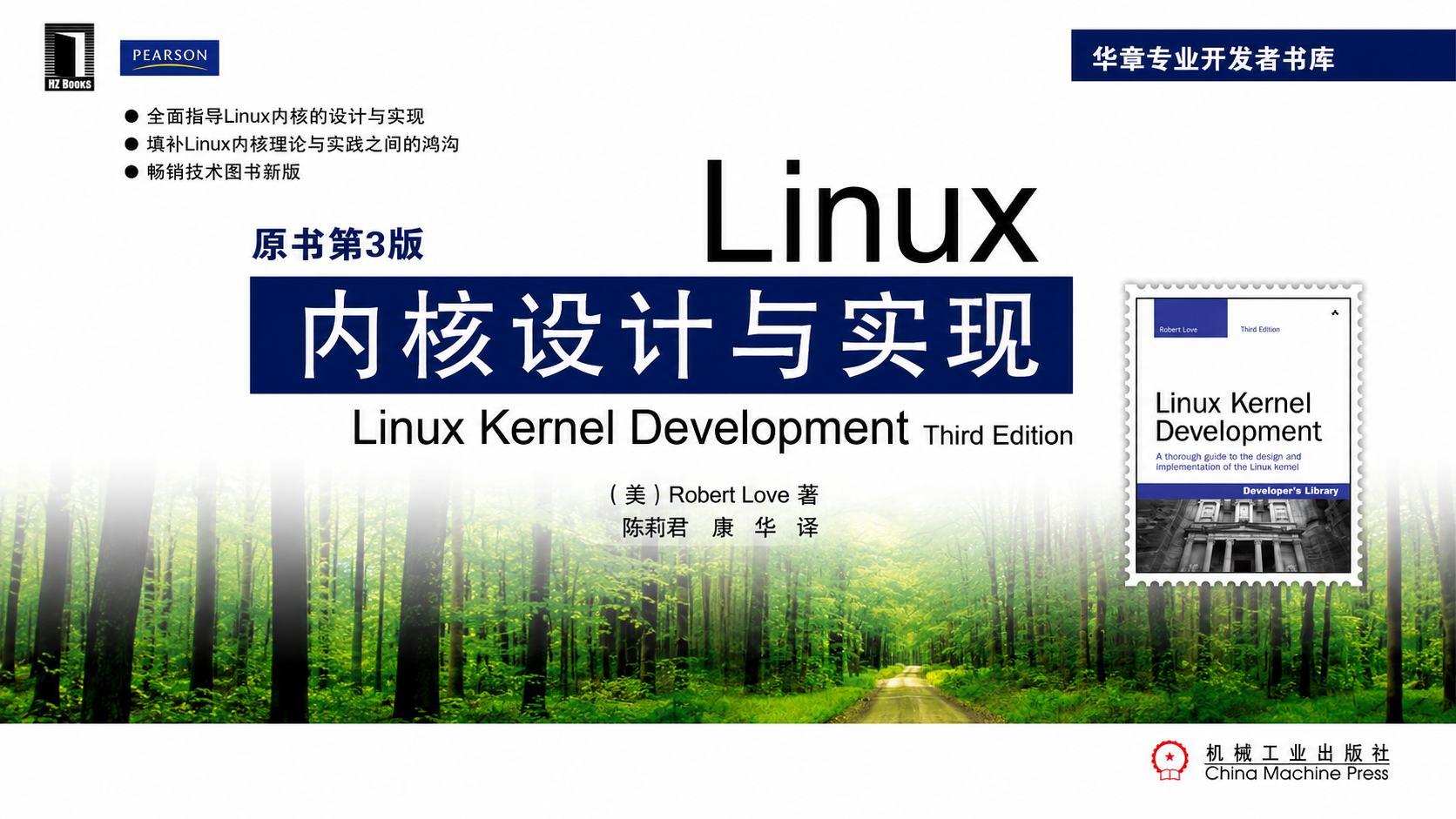
📖 Book Overview #
Linux Kernel Development (3rd Edition) is widely regarded as one of the most accessible and practical introductions to Linux kernel internals. Written by long-time kernel developer Robert Love, the book explains the architecture, design principles, and implementation details of the Linux kernel in a manner that benefits both kernel developers and advanced application programmers.
Rather than focusing solely on theory, the book bridges operating system concepts with real-world kernel implementation. Readers gain insight into how Linux manages processes, memory, filesystems, interrupts, scheduling, synchronization, and device interaction, while also learning how these subsystems affect application performance and system behavior.
Drawing heavily from the Linux 2.6 kernel era, the book explores many foundational concepts that continue to influence modern Linux kernels, including:
- Process management and scheduling
- System call implementation
- Kernel synchronization mechanisms
- Memory management architecture
- Virtual File System (VFS)
- Block I/O infrastructure
- Kernel timers and time management
- Device drivers and loadable kernel modules
- Debugging and kernel development workflows
The book is particularly valuable because it focuses on the reasoning behind kernel design decisions, helping readers understand not only how Linux works but why it works that way.
👨💻 About the Author #
Robert Love #
Robert Love is a well-known Linux kernel developer and open-source contributor whose work has significantly influenced modern Linux systems.
Throughout his career, he has held several prominent engineering positions, including:
- Senior Software Engineer at Google
- Chief Architect of Linux Desktop Technologies at Novell
- Kernel Engineer at MontaVista Software
- Kernel Engineer at Ximian
His contributions to Linux include work in several critical kernel subsystems:
- Kernel preemption
- Process scheduling
- Inotify filesystem event notifications
- Virtual memory enhancements
- Device drivers
- General kernel infrastructure
Beyond kernel development, Robert Love served as an editor for Linux Journal and authored several influential Linux books, including:
- Linux System Programming
- Linux in a Nutshell
- Linux Kernel Development
🏗️ Foundations of Linux Kernel Architecture #
The opening chapters establish the historical and architectural foundations of Linux.
Chapter 1: Introduction to the Linux Kernel #
Topics include:
- The evolution of Unix systems
- The origins of Linux and Linus Torvalds’ contributions
- Core operating system concepts
- Architectural differences between Linux and traditional Unix systems
- Linux versioning and release models
- The open-source development community and contribution process
This chapter provides the context necessary to understand why Linux evolved differently from many commercial operating systems.
Chapter 2: Getting Started with the Kernel #
Readers are introduced to:
- Kernel source tree organization
- Build systems
- Configuration mechanisms
- Kernel compilation workflows
- Development environments
This serves as a practical entry point for exploring kernel source code.
⚙️ Processes, Scheduling, and System Calls #
The Linux kernel’s process management subsystem is one of its most important responsibilities.
Chapter 3: Process Management #
Core concepts include:
- Process descriptors
- Process creation and termination
- Process states
- Parent-child relationships
- Context switching fundamentals
Chapter 4: Process Scheduling #
This chapter examines how Linux allocates CPU resources.
Key topics include:
- Scheduler architecture
- Run queues
- Scheduling classes
- Priority management
- The Completely Fair Scheduler (CFS)
Readers gain insight into how Linux balances fairness, responsiveness, and throughput.
Chapter 5: System Calls #
The system call interface serves as the boundary between user space and kernel space.
Topics include:
- System call dispatching
- User-to-kernel transitions
- Parameter passing
- Adding new system calls
- Security and validation considerations
🔧 Core Kernel Infrastructure #
Several chapters focus on foundational data structures and execution mechanisms.
Chapter 6: Kernel Data Structures #
Linux relies on specialized structures optimized for performance and concurrency, including:
- Linked lists
- Queues
- Trees
- Hash tables
- Bitmaps
Chapter 7: Interrupts and Interrupt Handlers #
Topics include:
- Hardware interrupt processing
- Interrupt controllers
- Interrupt registration
- Fast interrupt handling paths
Chapter 8: Bottom Halves and Deferred Work #
Linux separates urgent interrupt processing from deferred execution using mechanisms such as:
- Softirqs
- Tasklets
- Workqueues
This design minimizes interrupt latency while maintaining system responsiveness.
🔒 Synchronization and Concurrency Control #
Modern kernels must safely coordinate execution across multiple CPUs.
Chapter 9: Introduction to Kernel Synchronization #
The chapter introduces concurrency challenges such as:
- Race conditions
- Deadlocks
- Shared resource access
Chapter 10: Kernel Synchronization Methods #
Detailed coverage includes:
- Spinlocks
- Mutexes
- Semaphores
- Reader-writer locks
- Atomic operations
- Memory barriers
These mechanisms form the foundation of scalable multiprocessor kernel execution.
⏱️ Time and Memory Management #
Efficient resource management is central to operating system design.
Chapter 11: Timers and Time Management #
Topics include:
- Kernel clocks
- Timer infrastructure
- Jiffies
- High-resolution timers
- Timekeeping subsystems
Chapter 12: Memory Management #
The Linux memory subsystem is explored in depth:
- Physical memory management
- Virtual memory concepts
- Memory allocation strategies
- Slab allocators
- Paging mechanisms
These concepts are critical for understanding Linux performance characteristics.
📂 Filesystems and Storage Architecture #
Linux abstracts storage access through multiple layers.
Chapter 13: The Virtual File System (VFS) #
The VFS provides a unified interface across filesystems.
Topics include:
- Inodes
- Dentries
- Superblocks
- File objects
- Filesystem abstraction layers
Chapter 14: The Block I/O Layer #
This chapter examines how Linux manages storage devices.
Coverage includes:
- Block device architecture
- Request queues
- I/O schedulers
- Storage performance optimization
These components are essential for efficient disk access and throughput management.
Chapter 15: The Process Address Space #
Readers learn how Linux manages:
- Virtual address spaces
- Memory mappings
- Shared libraries
- User-space memory regions
Chapter 16: The Page Cache and Writeback #
Key topics include:
- Page cache architecture
- Dirty page management
- Writeback mechanisms
- Filesystem caching strategies
🖥️ Devices, Debugging, and Portability #
The final chapters focus on practical kernel development.
Chapter 17: Devices and Modules #
Topics include:
- Device driver architecture
- Character and block devices
- Loadable kernel modules
- Dynamic driver loading
Chapter 18: Debugging #
Kernel debugging techniques include:
- Logging and tracing
- Kernel debugging tools
- Crash analysis
- Diagnostic workflows
Chapter 19: Portability #
This chapter explains how Linux supports multiple hardware architectures through abstraction and platform-specific implementations.
Chapter 20: Patches, Development, and the Community #
The final chapter explores:
- Patch creation and submission
- Kernel review processes
- Development workflows
- Open-source collaboration practices
It provides valuable guidance for aspiring kernel contributors seeking to participate in Linux development.
🎯 Conclusion #
Linux Kernel Development (3rd Edition) remains one of the most influential books on Linux internals. Its greatest strength lies in explaining complex kernel mechanisms through clear, practical examples while maintaining sufficient technical depth for professional developers.
For software engineers, systems programmers, and aspiring kernel contributors, the book offers a comprehensive understanding of the core subsystems that power Linux—from process scheduling and memory management to filesystems, device drivers, and synchronization. Even as modern kernels continue to evolve, the architectural principles and engineering insights presented in this book remain highly relevant for understanding how Linux operates at its core.