
Advanced Programming in the UNIX Environment (3rd Edition)
📖 Book Overview #
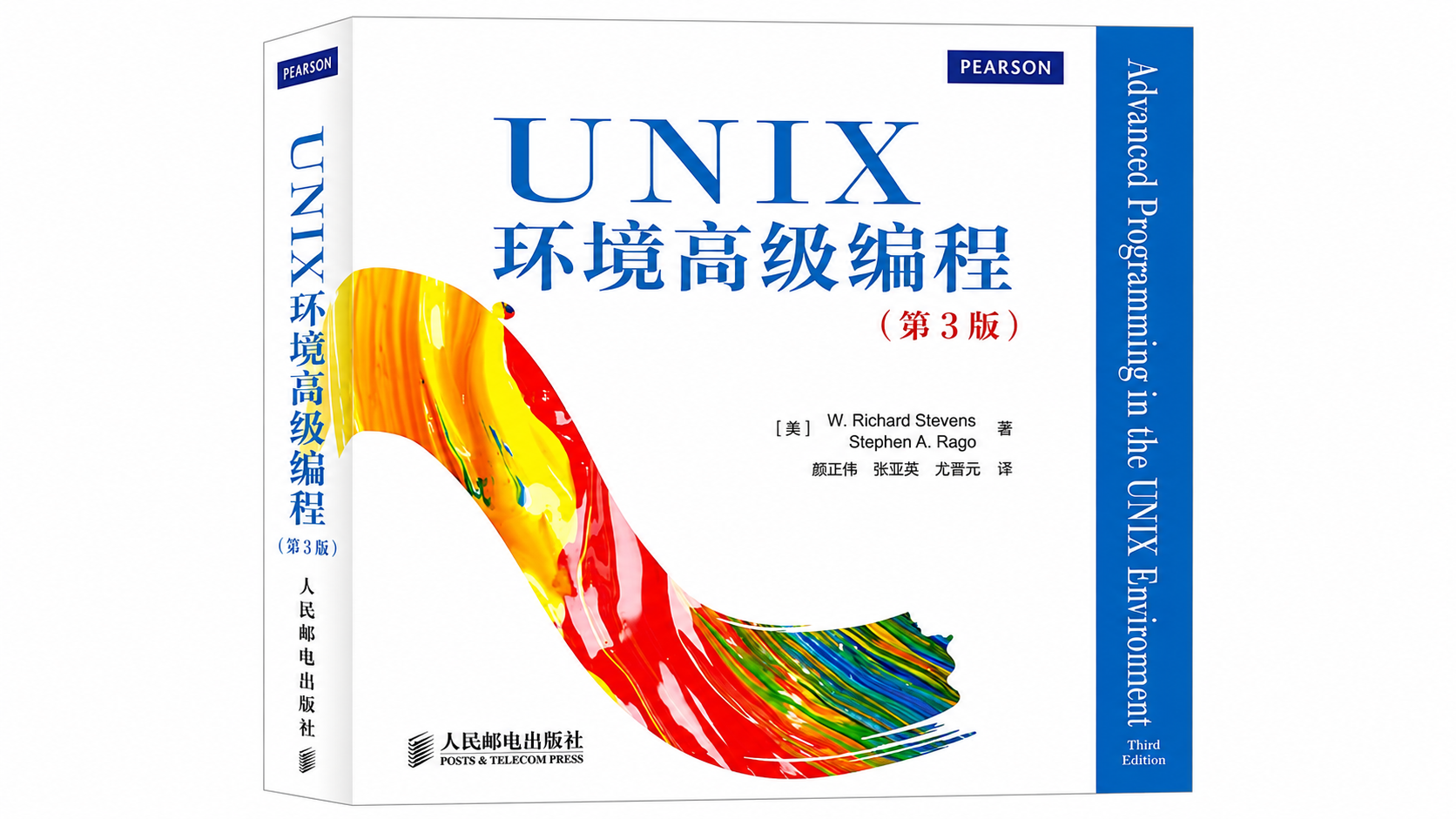
Advanced Programming in the UNIX Environment (APUE), Third Edition is widely recognized as one of the most influential books ever written on UNIX and Linux systems programming. Originally authored by W. Richard Stevens and later updated by Stephen A. Rago, the book serves as a bridge between operating system theory and practical software engineering.
Rather than focusing on a specific UNIX implementation, APUE teaches the standardized interfaces that define modern UNIX-compliant systems. The third edition aligns with the Single UNIX Specification Version 4 (SUSv4) and modern POSIX standards, making it relevant across Linux, BSD, macOS, Solaris, and other UNIX-like environments.
The book builds progressively from fundamental concepts such as files, directories, and processes to advanced topics including:
- Process control and scheduling
- Signal handling
- Threading and synchronization
- Interprocess communication (IPC)
- Network programming with sockets
- Advanced I/O techniques
- Terminal and pseudo-terminal management
- Production-grade daemon development
One of APUE’s greatest strengths is its emphasis on practical implementation. More than 10,000 lines of production-quality ISO C code accompany the text, demonstrating over 400 UNIX system calls and library functions through real-world examples.
⭐ Key Features of the Third Edition #
Modern POSIX-Compliant Coverage #
The third edition introduces numerous interfaces standardized after earlier releases, including:
- POSIX asynchronous I/O
- POSIX semaphores
- Spin locks
- Thread barriers
- Modern thread synchronization primitives
At the same time, outdated or deprecated interfaces have been reduced in favor of contemporary APIs used in production systems.
Extensive Real-World Source Code #
The book includes:
- Over 10,000 lines of tested C source code
- Hundreds of system call demonstrations
- Portable implementation examples
- Practical engineering exercises
The codebase serves as both a learning resource and a reference library for developers building UNIX applications.
Cross-Platform Validation #
Examples were validated across multiple UNIX implementations, including:
- Linux
- FreeBSD
- Solaris
- macOS
- Other POSIX-compliant systems
This portability focus helps readers understand both common behavior and implementation-specific nuances.
Engineering-Oriented Case Studies #
The final chapters move beyond APIs and demonstrate complete software systems, including:
- A database library implementation
- A network printer spooler
- Client-server communication frameworks
These projects show how low-level UNIX primitives combine to form production-ready applications.
🏗️ UNIX Foundations and Standards #
Chapter 1: UNIX System Overview #
The opening chapter introduces core UNIX concepts:
- System architecture
- Files and directories
- Process execution
- Standard I/O
- User identities
- Signals
- Time management
It establishes the conceptual foundation required for the rest of the book.
Chapter 2: UNIX Standards and Implementations #
A distinguishing feature of APUE is its detailed treatment of standards.
Topics include:
- ISO C
- POSIX
- Single UNIX Specification (SUS)
- Historical UNIX variants
- Linux, FreeBSD, Solaris, and macOS implementations
Readers learn how standards shape portability and why implementation differences matter in real-world development.
📂 File Systems and I/O Programming #
Chapter 3: File I/O #
This chapter explores the low-level UNIX file model through system calls such as:
openreadwritelseekclosefcntlioctl
Important concepts include:
- File descriptors
- Atomic operations
- File sharing semantics
- I/O performance considerations
Chapter 4: Files and Directories #
UNIX filesystem internals are examined through APIs such as:
statchmodchownmkdirlinkrename
The chapter explains:
- File permissions
- Ownership
- Symbolic links
- Directory traversal
- Filesystem metadata
Chapter 5: Standard I/O Library #
Coverage includes:
FILEstreams- Buffering behavior
- Formatted I/O
- Binary I/O
- Temporary files
- Memory streams
The distinction between standard I/O libraries and low-level system calls is explained in depth.
⚙️ Processes and Execution Environment #
Chapter 6: System Data and Configuration #
Topics include:
- User databases
- Group information
- Login records
- System identification
- Time and date APIs
Chapter 7: Process Environment #
This chapter examines:
- Program startup
- Environment variables
- Memory layout
- Shared libraries
- Dynamic memory allocation
- Resource limits
Readers gain a detailed understanding of how processes are initialized and managed.
Chapter 8: Process Control #
Key process-management mechanisms include:
forkvforkexecwaitsystem
Additional topics cover:
- Process accounting
- Scheduling
- User identity management
- Race conditions
Chapter 9: Process Relationships #
This chapter explores:
- Process groups
- Sessions
- Job control
- Controlling terminals
- Shell execution models
These concepts are essential for understanding UNIX shells and daemon processes.
🔔 Signals and Concurrency #
Chapter 10: Signals #
Signal handling receives extensive treatment, including:
- Signal generation and delivery
- Signal masks
- Reliable signal handling
sigactionsigprocmask- Real-time signals
The chapter explains how asynchronous events are managed within UNIX systems.
Chapter 11: Threads #
POSIX thread programming topics include:
- Thread creation and termination
- Mutexes
- Reader-writer locks
- Condition variables
- Spin locks
- Barriers
Synchronization strategies and concurrency design patterns are emphasized throughout.
Chapter 12: Thread Control #
Advanced threading topics include:
- Thread attributes
- Thread-local storage
- Cancellation handling
- Thread-aware signal management
- Thread and I/O interactions
🖥️ Daemons, Advanced I/O, and IPC #
Chapter 13: Daemon Processes #
This chapter covers:
- Daemon design principles
- Background execution
- Logging
- Single-instance enforcement
- Client-server architectures
It provides practical guidance for building long-running system services.
Chapter 14: Advanced I/O #
Advanced I/O mechanisms include:
- Non-blocking I/O
- Record locking
- I/O multiplexing
- Asynchronous I/O
- Scatter-gather I/O
- Memory-mapped files
These techniques are critical for building scalable applications.
Chapter 15: Interprocess Communication #
IPC mechanisms covered include:
- Pipes
- FIFOs
- Message queues
- Shared memory
- Semaphores
- POSIX IPC facilities
The chapter compares the strengths and limitations of each approach.
🌐 Networking and Advanced Communication #
Chapter 16: Network IPC and Sockets #
Socket programming fundamentals include:
- Socket creation
- Addressing models
- Connection management
- Data transmission
- Socket options
- Asynchronous networking
This chapter serves as a concise introduction to portable network programming.
Chapter 17: Advanced IPC #
Topics include:
- UNIX domain sockets
- Descriptor passing
- Service-oriented architectures
- Open server implementations
These features are widely used in modern UNIX system software.
🖲️ Terminals and Pseudo-Terminals #
Chapter 18: Terminal I/O #
The UNIX terminal subsystem is explored through:
- Terminal attributes
- Canonical and noncanonical modes
- Terminal control flags
- Window sizing
- Terminal databases (
termcap,terminfo) - Curses-based interfaces
Chapter 19: Pseudo Terminals #
Pseudo terminals (PTYs) form the foundation of:
- Terminal emulators
- Remote shells
- SSH sessions
- Container console interfaces
The chapter explains PTY architecture and implementation in detail.
🏢 Real-World Systems Engineering Projects #
Chapter 20: Building a Database Library #
This chapter demonstrates how to design and implement a database library using UNIX primitives.
Topics include:
- Data storage architecture
- Concurrency control
- Locking strategies
- Performance optimization
Chapter 21: Network Printer Communication #
The final chapter presents a complete network printing system featuring:
- Printer communication protocols
- HTTP integration
- Print spooling mechanisms
- Client-server workflows
This serves as a practical example of combining multiple UNIX subsystems into a cohesive application.
👥 About the Authors #
W. Richard Stevens #
W. Richard Stevens is one of the most respected figures in UNIX and networking literature. His works have educated generations of systems programmers and network engineers.
His most influential publications include:
- UNIX Network Programming
- TCP/IP Illustrated
- Advanced Programming in the UNIX Environment
His writing style remains widely admired for its clarity, accuracy, and practical focus.
Stephen A. Rago #
Stephen A. Rago is a veteran UNIX systems developer who participated in the development of UNIX System V Release 4 at Bell Labs.
As the primary maintainer of APUE’s later editions, he modernized the book to align with evolving POSIX standards and contemporary UNIX implementations.
🎯 Conclusion #
Advanced Programming in the UNIX Environment (3rd Edition) remains one of the most authoritative resources for mastering UNIX and Linux systems programming. Its unique combination of standards-based explanations, production-quality source code, and practical engineering examples makes it valuable for both experienced developers and those transitioning into low-level systems development.
For engineers seeking a deep understanding of processes, filesystems, signals, threads, networking, and IPC, APUE continues to serve as an essential reference and one of the most enduring classics in computer systems literature.