
Computer Systems: A Programmer’s Perspective (3rd Edition)
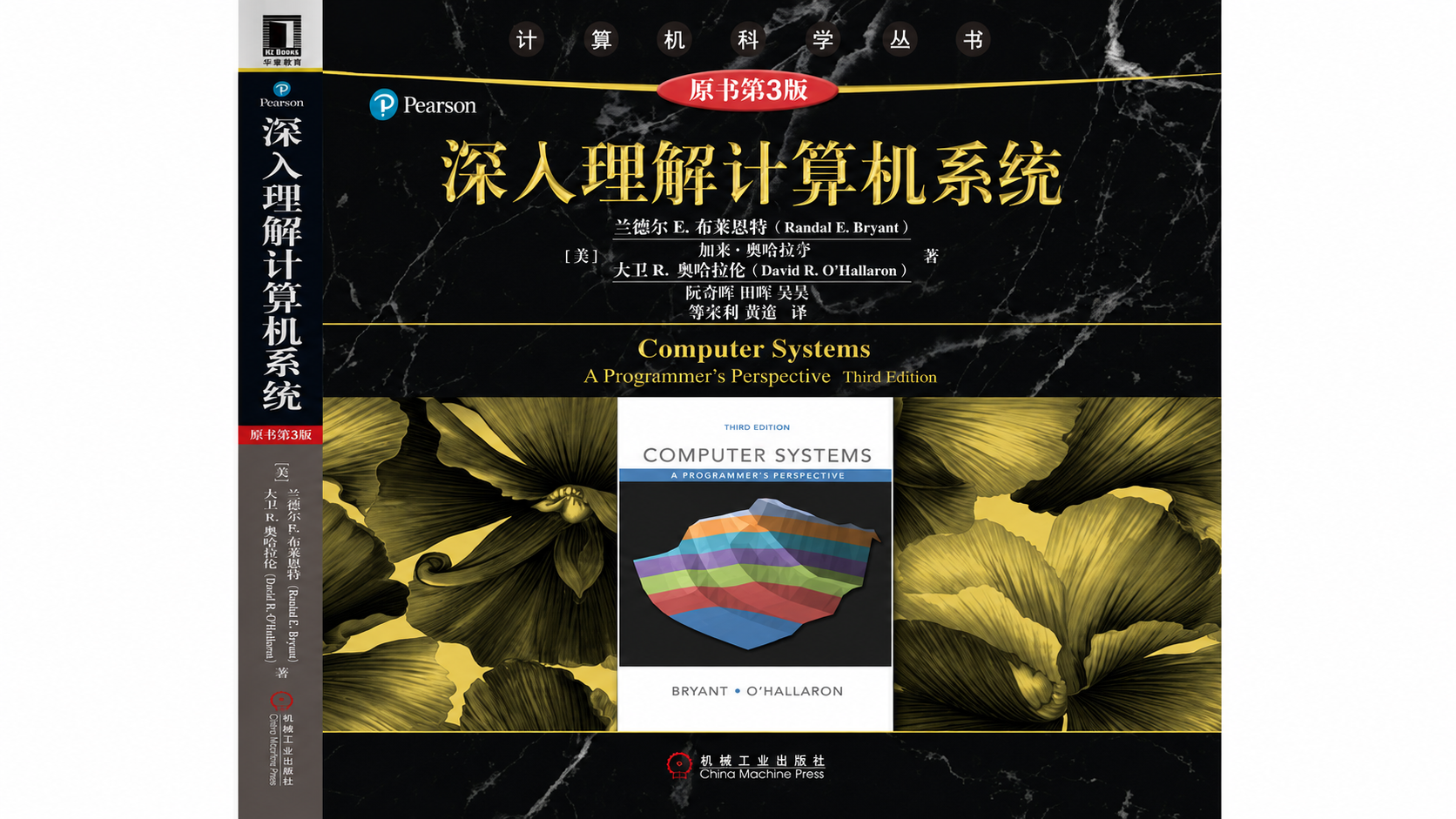
Computer Systems: A Programmer’s Perspective (3rd Edition)—commonly known as CSAPP—is widely regarded as one of the most influential textbooks in computer science. Rather than treating software and hardware as separate disciplines, the book bridges the gap between them by explaining how modern computer systems execute programs from the perspective of a software developer.
Covering topics that span computer architecture, operating systems, assembly language, compiler behavior, networking, and performance optimization, CSAPP has become a foundational reference for students, systems programmers, and software engineers seeking a deeper understanding of how software interacts with hardware.
📖 Understanding Computer Systems from a Programmer’s Perspective #
Unlike traditional computer architecture textbooks that primarily focus on hardware design, CSAPP approaches the subject from the viewpoint of the programmer.
Its central objective is to answer questions such as:
- Why does a program perform the way it does?
- How are high-level language constructs translated into machine code?
- How do processors, memory, and operating systems collaborate during program execution?
- What causes common performance bottlenecks?
By examining the complete execution pipeline—from source code to processor instructions—the book enables readers to understand not only what happens inside a computer system, but also why it happens.
This systems-level perspective is particularly valuable for developers working on performance-critical software, operating systems, compilers, embedded systems, and cloud infrastructure.
🆕 Major Changes in the Third Edition #
The third edition introduces several substantial updates that modernize the book while aligning it with today’s computing platforms.
The most significant change is the complete transition from a mixed IA-32/x86-64 presentation to a fully x86-64-based architecture throughout the text.
This shift better reflects the reality of modern desktop, server, and cloud computing environments.
Complete Migration to x86-64 #
Earlier editions divided examples between 32-bit IA-32 and 64-bit x86-64 architectures.
The third edition removes this split entirely by adopting x86-64 as the primary instructional platform.
Benefits include:
- Consistent assembly language examples
- Modern processor architecture coverage
- Improved relevance for contemporary software development
- Better alignment with current Linux and Windows systems
⚙️ Expanded Machine-Level Programming #
One of the most noticeable improvements is the extensive rewrite of machine-level programming examples.
Floating-Point Support #
For the first time, the book provides comprehensive coverage of floating-point computation at the assembly level.
Readers learn how floating-point values are represented, manipulated, and optimized by modern processors, providing valuable insight into numerical computing and compiler-generated code.
Native 64-Bit Architecture #
All processor examples have been updated to fully embrace 64-bit computing.
Topics now consistently cover:
- 64-bit registers
- Addressing modes
- Pointer arithmetic
- Memory organization
- Instruction execution
This modernization makes the material directly applicable to current operating systems and software platforms.
🚀 Improved Performance Modeling #
Understanding software performance remains one of CSAPP’s defining strengths.
The third edition introduces more sophisticated processor models featuring:
- Additional execution units
- Enhanced pipeline behavior
- More realistic control logic
- Improved data-flow analysis
These updates enable readers to develop more accurate mental models of instruction-level parallelism and processor performance.
The result is a stronger foundation for performance optimization and low-level software tuning.
🔗 Modern Linking and Dynamic Libraries #
The third edition significantly expands its discussion of executable linking and dynamic loading.
Key topics include:
- Position-Independent Code (PIC)
- Global Offset Table (GOT)
- Procedure Linkage Table (PLT)
- Dynamic shared libraries
- Library interposition
These mechanisms are essential for understanding modern executable formats, shared object loading, runtime symbol resolution, and advanced debugging techniques.
Developers working with Linux systems, compilers, or low-level tooling will find these additions particularly valuable.
🛡️ More Comprehensive Signal Handling #
Signal handling receives a substantial revision with expanded explanations and practical guidance.
The updated coverage includes:
- Signal delivery mechanisms
- Signal handler implementation
- Async-signal-safe programming
- Safe function selection
- Common synchronization pitfalls
These additions help readers write more robust Unix and Linux applications while avoiding subtle concurrency and reliability issues.
🌐 Modern Network Programming #
Networking chapters have also been modernized to reflect contemporary software development practices.
Updates include:
- New networking APIs
- Protocol-independent programming
- Thread-safe networking techniques
- Improved socket programming examples
These revisions better align the book with current production networking environments and modern operating system interfaces.
💡 Why CSAPP Remains a Must-Read #
Although hardware architectures and software frameworks continue to evolve, the fundamental principles explained in CSAPP remain highly relevant.
The book equips readers with a deep understanding of concepts that underpin virtually every area of systems software, including:
- Operating systems
- Compilers
- Embedded systems
- High-performance computing
- Cloud infrastructure
- Database engines
- Distributed systems
- Performance engineering
Rather than teaching platform-specific techniques, it develops the analytical skills needed to understand how complex software interacts with modern computer hardware.
📚 Conclusion #
Computer Systems: A Programmer’s Perspective (3rd Edition) remains one of the definitive resources for mastering the relationship between software and hardware.
Its complete transition to x86-64, expanded coverage of machine-level programming, modern linking techniques, performance modeling, signal handling, and network programming make it significantly more relevant to today’s computing landscape than previous editions.
For developers seeking a comprehensive understanding of computer systems—from instruction execution and memory management to operating systems and networking—CSAPP continues to be an essential reference that bridges theory with practical systems programming.