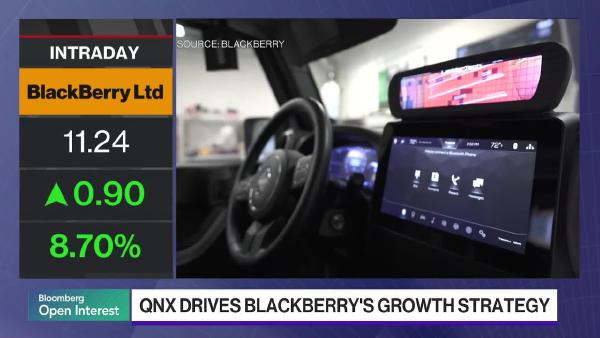
BlackBerry QNX Royalty Backlog Tops $1.2B, Up $250M
BlackBerry’s QNX business has reached a new milestone, with its royalty backlog surpassing $1.2 billion as adoption of its automotive software platforms and expansion into emerging embedded computing markets accelerate. Announced on October 21, 2026, the milestone represents an increase of more than $250 million, or over 26%, from approximately $950 million at the end of fiscal 2026.
The growth reflects continued customer adoption of QNX foundational software, particularly QNX Software Development Platform (SDP) 8.0, alongside the first reported design win for Alloy Kore, the company’s foundational automotive operating system.
Beyond the automotive sector, BlackBerry QNX is also expanding into robotics, industrial automation, medical devices, and other physical AI applications. These markets create additional opportunities for the company’s real-time operating system and safety-oriented software technologies.
The backlog milestone is significant because it reflects expected future royalty revenue associated with customer design wins. However, it should not be confused with revenue already recognized or guaranteed future earnings. Actual royalties will depend on customer production volumes, program lifecycles, and contractual conditions.
📈 QNX Royalty Backlog Surpasses $1.2 Billion #
The increase in QNX’s royalty backlog highlights the expanding commercial reach of BlackBerry’s embedded software portfolio.
| Metric | Reported Figure |
|---|---|
| QNX royalty backlog | More than $1.2 billion |
| Backlog at FY2026 year-end | Approximately $950 million |
| Increase in backlog | More than $250 million |
| Reported growth rate | More than 26% |
| Reporting date | October 21, 2026 |
The backlog expanded within approximately two quarters, indicating a growing pipeline of customer programs expected to generate royalties over time.
According to BlackBerry, the increase was primarily driven by broader adoption of QNX SDP 8.0, the initial Alloy Kore design win, and additional engagements across automotive and general embedded markets.
Understanding QNX’s Royalty-Based Business Model #
QNX generates a portion of its revenue through royalties associated with customer products that incorporate its software. When a design win is secured and the company can reasonably estimate the associated future royalties, the expected amount can be included in its royalty backlog.
Revenue is subsequently recognized as customer products enter production and shipment volumes develop.
This model creates a distinction between design activity and realized revenue. A software platform may be selected for a vehicle program well before mass production begins, allowing the expected royalties to accumulate in the backlog ahead of their recognition.
The backlog therefore provides an indication of the potential future revenue supported by existing design wins, but it remains sensitive to actual production volumes, program delays, cancellations, contractual modifications, and other commercial variables.
🚗 QNX SDP 8.0 Expands Its Role in Software-Defined Vehicles #
QNX SDP 8.0 is emerging as a key contributor to the business’s growth by addressing the evolving computing requirements of software-defined vehicles (SDVs).
As automakers consolidate previously separate electronic control units and vehicle functions into centralized high-performance computing platforms, the software architecture must support increasingly complex workloads while maintaining isolation, reliability, and predictable system behavior.
QNX’s platform is designed to support these requirements, enabling multiple software domains and instances to operate within a common vehicle computing architecture.
Centralized Vehicle Computing Creates More Software Opportunities #
The transition toward centralized and domain-based vehicle computing could increase the amount of QNX software deployed in each vehicle.
Traditional automotive electronics often distribute functions across numerous individual control units. Newer architectures increasingly consolidate workloads into more powerful computing platforms, requiring operating systems capable of coordinating multiple applications and maintaining appropriate separation between software components.
QNX’s ability to support multiple software domains can make it a candidate for these architectures, potentially increasing the software content associated with each vehicle program and, in turn, its royalty potential.
BlackBerry says it is actively collaborating with major global original equipment manufacturers (OEMs) and Tier 1 automotive suppliers to evaluate and develop solutions based on SDP 8.0.
The commercial impact will depend on how many programs reach production, the number of vehicles shipped, and the specific royalty arrangements associated with each deployment.
🧩 Alloy Kore Extends QNX Further Up the Automotive Software Stack #
Another important contributor to QNX’s potential growth is Alloy Kore, which expands the company’s ambitions beyond individual software components toward a broader foundational automotive operating system.
BlackBerry has reported its first design win for Alloy Kore and expects the associated project to generate more than $100 million in future royalties over its lifecycle.
According to the company, this represents the largest single project design win in QNX’s history.
From Individual Components to a Broader Software Platform #
QNX has historically supplied foundational software for automotive applications, including operating-system components used in infotainment, digital cockpits, and safety-related systems.
Alloy Kore represents an opportunity to extend that role across a broader portion of the automotive software stack.
A more comprehensive platform can potentially increase QNX’s involvement in vehicle architecture and expand the range of software functions associated with a single OEM program. If adoption scales across multiple vehicle platforms, this approach could also increase the royalty opportunity per vehicle.
However, the projected royalties associated with the initial design win represent expected future revenue rather than an immediate financial contribution. The timing and total amount ultimately realized will depend on the customer program’s production schedule, volume, and contractual terms.
For broader context on QNX’s role in automotive systems, see QNX and neueHCT’s global ADAS platform design win.
🤖 Robotics and Physical AI Open Additional Growth Markets #
QNX’s growth strategy extends beyond automotive computing. BlackBerry also reported new design wins across robotics, industrial automation, and medical devices, where reliable embedded software remains important to system operation.
These applications share several requirements with automotive platforms: predictable execution, software isolation, dependable operation, and support for systems that interact directly with the physical world.
As AI workloads move from cloud-based services into robots, industrial equipment, and intelligent edge devices, software platforms must accommodate both computationally demanding workloads and operational constraints.
Why Safety-Oriented Embedded Software Matters #
Physical AI systems differ from conventional cloud applications because software decisions can directly influence machines and their surrounding environments.
Robotic systems, for example, may need to process sensor inputs, execute control tasks, and coordinate motion under strict timing requirements. Industrial automation and medical equipment can impose additional reliability and safety constraints.
QNX’s established embedded software capabilities provide a potential foundation for these applications, particularly where deterministic operation, isolation, and functional-safety requirements are important.
The commercial opportunity will depend on the extent to which customers adopt QNX in these markets and the number of resulting systems that enter production.
Strategic Partnerships Support Platform Expansion #
BlackBerry also highlighted partnerships with major chip suppliers as a factor supporting its position in next-generation intelligent systems.
Hardware partnerships can help software vendors align their platforms with emerging processor architectures and provide OEMs with a more integrated development path.
For QNX, this is particularly relevant as automotive computing technologies increasingly overlap with edge AI, robotics, and industrial automation.
Its broader positioning in safety-oriented AI infrastructure is also illustrated by the QNX and NVIDIA IGX Thor platform collaboration, which explores the relationship between embedded software and AI computing platforms.
💼 BlackBerry Management Highlights Growing Commercial Momentum #
BlackBerry CEO John Giamatteo described the $1.2 billion milestone as evidence of strong demand for QNX’s foundational software and the commercial potential of its newer products.
He emphasized that the backlog increased by more than $250 million from the approximately $950 million reported at the end of fiscal 2026, pointing to growing adoption of SDP 8.0 and the potential contribution from Alloy Kore.
John Wall, president of QNX, similarly highlighted the expanding scope of customer collaborations and the increasing value of software deployments in high-performance vehicle computing architectures.
Wall also emphasized the company’s efforts to extend its embedded software capabilities into robotics, industrial automation, medical devices, and other physical AI applications.
The management commentary points to a strategy built around three related growth drivers:
- Greater software content per vehicle: Centralized computing architectures may allow QNX to support more software domains and increase the royalty opportunity within individual automotive programs.
- Expansion up the software stack: Alloy Kore could extend QNX’s role beyond individual components toward broader automotive platform deployments.
- Diversification beyond automotive: Robotics, industrial automation, and medical devices provide additional markets for QNX’s reliability-focused embedded software.
Together, these areas represent opportunities to expand the company’s customer base and future royalty potential, although the financial contribution of each will depend on commercial execution and production adoption.
📊 What the $1.2 Billion Backlog Means for QNX’s Growth Outlook #
The royalty backlog milestone provides an important indicator of QNX’s commercial reach, but investors and industry observers should distinguish between expected future royalties and near-term financial performance.
A growing backlog suggests that more customer programs have the potential to generate future royalty revenue. However, the timing of that revenue can vary substantially because automotive and industrial products often require long development, qualification, and production ramp-up periods.
Three factors will be particularly important in determining how the backlog translates into reported revenue.
Production Volume and Program Lifecycles #
The eventual royalty contribution from a design win depends partly on how many units customers produce over the program’s lifetime.
Programs that achieve large-scale production can generate substantial royalties, while delayed launches, reduced demand, or cancelled projects can result in lower-than-expected contributions.
Adoption of New-Generation Platforms #
The broader adoption of SDP 8.0 and the commercial rollout of Alloy Kore could increase the amount of QNX software incorporated into customer systems.
The key indicators will include additional design wins, production milestones, and evidence that new platforms are being deployed across multiple customer programs.
Expansion Into Non-Automotive Markets #
Robotics, industrial automation, and medical devices could diversify QNX’s future royalty base beyond vehicle production.
These markets offer different deployment patterns and product lifecycles, so their contribution will depend on customer adoption and the specific business models associated with each application.
While the latest backlog figure is encouraging, it does not by itself establish a particular revenue growth rate or guarantee that all expected royalties will be realized.
⚠️ Royalty Backlog Is Not Guaranteed Revenue #
BlackBerry defines QNX royalty backlog as the expected future revenue from variable royalties anticipated under its customer programs. Estimates are based on applicable royalty rates and projected production volumes over the lifecycle of design wins.
The forecasts draw on historical experience and customer-provided projections that management considers reasonable.
Nevertheless, the company explicitly cautions that actual revenue may differ from backlog estimates. Production volumes can change, customer programs may be terminated or modified, and other contractual or commercial developments can affect the amount ultimately recognized.
The more than $1.2 billion figure should therefore be understood as a forward-looking indicator of expected royalty opportunities rather than cash already received, recognized revenue, or a guaranteed financial outcome.
📝 Conclusion: QNX’s Growth Extends Beyond Automotive Software #
BlackBerry QNX’s royalty backlog exceeding $1.2 billion marks a significant milestone for its embedded software business. The increase of more than $250 million in approximately two quarters reflects growing customer engagement, broader adoption of SDP 8.0, the initial Alloy Kore design win, and new opportunities in robotics, industrial automation, and medical devices.
The underlying strategy is to expand both the breadth of QNX’s deployments and the amount of software incorporated into each customer platform. In automotive computing, centralized architectures and software-defined vehicle designs could create opportunities for greater software content per vehicle. Alloy Kore may extend QNX’s role across a broader portion of the automotive software stack, while physical AI applications offer additional avenues for diversification.
The next important indicators will be the conversion of design wins into production programs, the pace of SDP 8.0 adoption, and the commercial rollout of Alloy Kore.
For now, the $1.2 billion backlog demonstrates the scale of QNX’s expected future royalty opportunities. Its ultimate financial impact will depend on production volumes, customer adoption, and the company’s ability to convert its expanding project pipeline into recurring royalty revenue.