BlackBerry’s QNX Strategy: Powering the Future of Physical AI
For many professionals, BlackBerry remains synonymous with the iconic Bold 9900 and its physical keyboard. Once the preferred smartphone for executives and government officials, the brand defined secure mobile communications during the early smartphone era.
Today, however, BlackBerry’s most important product is one that few consumers ever see.
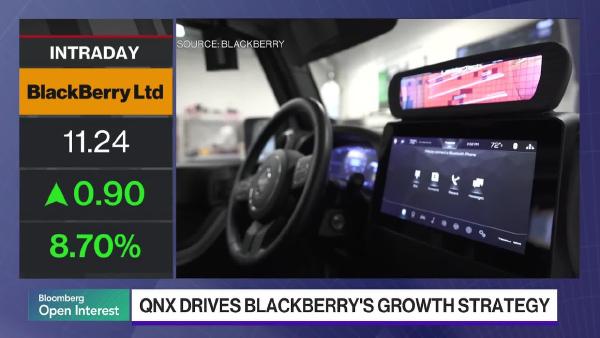
Its QNX real-time operating system (RTOS) quietly powers approximately 275 million vehicles worldwide, serving as the software foundation for advanced driver assistance systems (ADAS), digital cockpits, domain controllers, and other safety-critical automotive functions. While invisible to drivers, QNX has become one of the industry’s most trusted platforms for software-defined vehicles (SDVs), with adoption spanning major automakers across North America, Europe, Japan, and China.
Rather than representing a diminished role, this invisibility reflects BlackBerry’s strategic evolution—from a consumer hardware company into a provider of mission-critical software infrastructure.
🚗 From Smartphones to Invisible Infrastructure #
Unlike consumer operating systems that compete for user attention, QNX is designed to disappear into the background.
Its responsibility is not delivering user experiences but ensuring that systems responsible for safety, reliability, and deterministic execution perform flawlessly.
Modern vehicles rely on QNX to support capabilities such as:
- Lane keeping assistance
- Digital instrument clusters
- Autonomous driving subsystems
- Advanced driver assistance systems (ADAS)
- Domain and zonal controllers
- Vehicle communication gateways
As software increasingly defines automotive functionality, QNX has positioned itself as the trusted execution environment beneath higher-level AI and application software.
👨💼 Leadership Without Legacy Bias #
BlackBerry’s transformation accelerated under CEO John DiMaggio, who joined the company in 2021 before becoming Chief Executive Officer in December 2023.
Unlike many long-time executives, DiMaggio was never part of BlackBerry’s Research In Motion era when its smartphones dominated the enterprise mobile market.
Instead, he brought decades of cybersecurity and operational experience, including leadership roles at McAfee and AVG Technologies, where he developed a reputation for restructuring mature technology businesses.
This external perspective proved valuable.
Without emotional attachment to BlackBerry’s hardware legacy, DiMaggio approached the company’s portfolio pragmatically—evaluating businesses based on long-term strategic value rather than historical significance.
📉 Recognizing the Cost of Transformation #
When DiMaggio assumed leadership, BlackBerry was still dealing with the financial consequences of years of diversification.
For fiscal year 2023, the company reported a GAAP net loss of approximately $734 million, driven largely by impairment charges related to goodwill and long-lived assets.
These impairments represented more than accounting adjustments.
They acknowledged that several previous acquisitions and strategic initiatives had failed to deliver their expected long-term value.
Although significantly smaller than the multi-billion-dollar losses associated with BlackBerry’s smartphone collapse in 2014, these write-downs marked one of the largest financial resets since the company transitioned into a software-focused business.
Rather than continuing to pursue multiple experimental businesses, BlackBerry’s leadership chose a disciplined strategy centered on sustainable recurring revenue.
🎯 Focusing on Two Core Businesses #
The company’s new direction concentrated investment around two complementary business segments:
- QNX
- Secure Communications
This strategic focus also meant divesting businesses that no longer aligned with long-term priorities.
One notable example was the sale of Cylance, BlackBerry’s endpoint cybersecurity business, to Arctic Wolf.
Rather than abandoning cybersecurity altogether, BlackBerry narrowed its focus toward high-assurance communications designed for governments, defense organizations, and critical infrastructure operators.
The objective shifted from competing broadly in endpoint protection toward serving markets where reliability, trust, and security command significantly higher strategic value.
📊 Early Results Validate the Strategy #
The focused approach has already begun producing measurable business results.
During the first quarter of fiscal year 2027:
- QNX revenue increased by 26% year over year
- Secure Communications revenue grew by 24% year over year
The company also reported stronger-than-expected profitability, revenue growth, and cash generation.
Perhaps most significantly, QNX’s long-term backlog expanded from approximately $6–7 billion several years ago to roughly $9.5 billion, while deployments increased from fewer than 200 million vehicles to approximately 275 million vehicles worldwide.
These figures reinforce BlackBerry’s assertion that its transformation phase has concluded and that the company has entered a period focused on sustainable growth.
🔒 A Shared Philosophy: Reliability Above All #
Although QNX and Secure Communications address different markets, they share a common engineering philosophy.
Both products are designed for environments where failure carries unacceptable consequences.
Secure Communications #
Growing geopolitical uncertainty has increased demand for highly secure communication platforms capable of protecting sensitive government and defense information.
Solutions such as SecuSuite provide military-grade encrypted voice and video communications, enabling organizations to maintain digital sovereignty over highly confidential conversations.
Unlike consumer messaging platforms, these systems prioritize assurance, certification, and operational resilience over convenience.
QNX #
QNX applies the same philosophy to embedded computing.
Its purpose is to guarantee deterministic operation in environments where software failures may endanger human lives or critical infrastructure.
Examples include:
- Automotive safety systems
- Industrial robotics
- Medical devices
- Aerospace control systems
- Defense platforms
In these domains, software must execute predictably regardless of workload or environmental conditions.
🤖 The Rise of Physical AI #
Artificial intelligence is rapidly expanding beyond cloud-hosted language models into systems that directly interact with the physical world.
This emerging discipline—often referred to as Physical AI—introduces entirely new engineering requirements.
Unlike text generation, Physical AI controls:
- Motors
- Sensors
- Robotic manipulators
- Medical equipment
- Autonomous machines
- Industrial infrastructure
As AI begins making real-time decisions within physical environments, functional safety and deterministic execution become essential rather than optional.
A delayed language model response may inconvenience a user.
A delayed robotic control signal can damage equipment—or endanger lives.
This is precisely where QNX’s architectural strengths become increasingly valuable.
⚙️ Why Real-Time Operating Systems Matter #
Traditional operating systems prioritize flexibility and application compatibility.
Mission-critical systems require different characteristics.
Real-time operating systems such as QNX provide:
- Deterministic scheduling
- Low-latency interrupt handling
- Functional isolation
- Fault containment
- High availability
- Safety certification support
These capabilities allow AI inference engines, safety controllers, and traditional embedded applications to coexist securely on the same hardware platform without compromising system integrity.
As Physical AI adoption accelerates, this separation between AI workloads and deterministic control logic will become increasingly important.
🌐 Expanding Beyond Automotive #
Although automotive remains QNX’s largest market, BlackBerry has spent years expanding into broader embedded industries.
Current investment areas include:
- Healthcare devices
- Robotics
- Industrial automation
- Edge AI platforms
- Human-interactive machines
- Smart infrastructure
Revenue generated by mature automotive deployments provides the financial foundation for developing these emerging markets.
This strategy creates a sustainable investment cycle where established businesses fund long-term innovation rather than relying exclusively on external financing.
🚀 Building the Physical AI Ecosystem #
BlackBerry is also strengthening QNX through strategic technology partnerships.
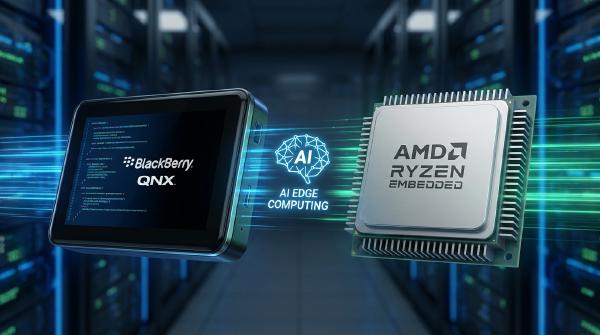
Integration with platforms such as NVIDIA IGX Thor and the NVIDIA Halos Safety Stack positions QNX as a trusted execution layer for AI-enabled edge computing environments.
These collaborations target next-generation applications including:
- Autonomous robotics
- Intelligent healthcare systems
- Industrial AI
- Edge inference platforms
- Safety-certified AI workloads
By combining deterministic operating system capabilities with accelerated AI computing, QNX provides the foundational software infrastructure required for Physical AI deployments.
📈 A Different Kind of Growth Story #
BlackBerry’s transformation illustrates an unusual lesson in technology strategy.
The company’s greatest opportunity emerged only after it stopped trying to recreate its former identity.
The decline of its smartphone business allowed its underlying expertise in real-time computing, security, and reliability to evolve into software infrastructure serving entirely different markets.
Today, BlackBerry’s technology no longer seeks visibility.
Instead, it operates beneath the surface—powering vehicles, industrial systems, medical devices, robots, and the emerging generation of intelligent machines.
🔮 The Infrastructure Behind the Next Computing Era #
As artificial intelligence becomes embedded into physical products, the importance of invisible infrastructure will continue to grow.
Future intelligent systems will require operating platforms capable of combining:
- Functional safety
- Deterministic real-time performance
- Cybersecurity
- Hardware isolation
- AI acceleration
- Long-term reliability
These characteristics are becoming foundational requirements rather than niche capabilities.
BlackBerry’s strategic repositioning demonstrates how legacy technology companies can create new value by focusing on enduring engineering principles instead of consumer visibility.
While the BlackBerry smartphone has largely disappeared from everyday life, the technologies that once made it trusted have evolved into the software foundation powering millions of connected devices—and may ultimately underpin the broader era of Physical AI.