Loft Orbital’s Shift from Hosted Payloads to Space Compute
Traditional satellite missions require customers to assume substantial costs and risks across spacecraft development, payload integration, launch, operations, and ground infrastructure. Loft Orbital is pursuing a different model: instead of requiring customers to own an entire satellite or build dedicated infrastructure, it provides standardized orbital resources that can be shared, scheduled, and accessed as a service.
Loft Orbital’s evolution can be understood as a progression from physical payload hosting to virtual missions and ultimately orbital computing. Its platform combines standardized payload interfaces, shared satellite infrastructure, cloud-based mission orchestration, onboard processing, and flexible resource scheduling.
The result is a three-layer business model: Hardware Hosting → Virtual Missions → Orbital Computing.
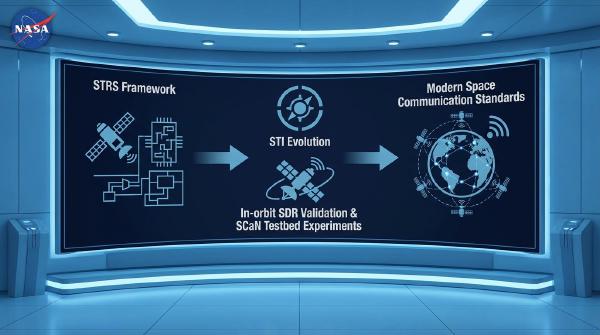
As open architectures such as the Modular Open Systems Approach (MOSA) and Space Telecommunications Interface (STI) gain adoption, the boundary between satellite hardware and software is becoming increasingly flexible. This enables Loft Orbital to move beyond traditional hosted payload services toward a model in which sensors, compute, communications capacity, and orbital time can be consumed as shared infrastructure.
In simple terms, Loft Orbital is evolving from a company that leases space on satellites into an operator that can lease space-based capabilities.
🚀 From Satellite Hosting to Space Infrastructure #
Founded in 2017 and headquartered in San Francisco, Loft Orbital positions itself as a Low Earth Orbit (LEO) infrastructure provider. Its fundamental proposition is to break away from the traditional “one satellite, one customer” model by allowing multiple customers and missions to share standardized spacecraft platforms.
The company’s early architecture centered on two core technologies.
Payload Hub #
Payload Hub provides a standardized interface for integrating payloads with spacecraft infrastructure. It abstracts key interfaces such as power, data, thermal management, and mechanical integration, reducing the engineering effort normally required for custom satellite integration.
This approach enables payloads to be integrated more like standardized modules rather than bespoke spacecraft subsystems.
Cockpit #
Cockpit is Loft Orbital’s cloud-based mission-control and resource-management environment. It provides APIs and software tools for mission orchestration, resource scheduling, data downlink, and spacecraft health monitoring.
Together, Payload Hub and Cockpit create the foundation for a shared satellite platform in which physical payload integration and mission operations can be standardized.
YAM and Longbow Platforms #
Loft Orbital’s spacecraft portfolio includes the YAM (“Yet Another Mission”) family of shared small-to-medium satellite platforms as well as the Longbow medium-class dedicated spacecraft bus.
The company’s initial commercial model relied heavily on rideshare-style deployment. Multiple customer payloads could be integrated onto the same spacecraft, while Loft Orbital handled integration, testing, launch coordination, operations, and ground infrastructure.
As the platform matured, the company expanded beyond individual hosted payloads into larger constellation programs and software-defined virtual missions.
🛰️ Hosted Payloads as the First Business Layer #
Loft Orbital’s original hosted payload model can be viewed as an orbital land-lease business.
The analogy is straightforward:
- Satellite bus = orbital land
- Customer payload = building constructed on that land
- Loft Orbital = infrastructure and property operator
- Customer = payload owner and mission operator
The customer provides the physical payload while Loft Orbital supplies the spacecraft platform and associated infrastructure.
This arrangement removes many of the most difficult parts of operating an independent satellite mission. Customers do not necessarily need to develop their own spacecraft bus, manage launch integration, establish ground infrastructure, or operate the satellite themselves.
However, the model still has an important limitation: the customer remains tied to physical hardware.
A payload must be designed, manufactured, tested, integrated, launched, and maintained. Once deployed, its capabilities are also largely constrained by the hardware that was selected before launch.
This creates several structural limitations:
- Hardware development remains expensive.
- Integration creates non-recurring engineering costs.
- Payload functionality can become difficult to modify after launch.
- Compute and sensor resources remain tied to individual missions.
- Revenue is heavily associated with physical deployment and integration.
Loft Orbital’s later strategy attempts to address these limitations by turning orbital infrastructure into a more software-defined resource.
🌐 Open Architectures Enable Software-Defined Payloads #
The growing adoption of open architectural concepts such as MOSA and STI changes the economics of satellite infrastructure.
Instead of treating every payload as a completely independent hardware system, standardized interfaces can separate the underlying spacecraft infrastructure from mission-specific software.
This creates a more general-purpose orbital computing environment.
Hardware Becomes an Abstracted Resource #
Under a software-defined architecture, spacecraft resources can increasingly be exposed through standardized interfaces and APIs.
Instead of delivering a complete physical payload, a customer could potentially provide an algorithm for:
- Ship detection
- Wildfire monitoring
- Earth observation analytics
- RF signal intelligence
- Maritime domain awareness
- On-orbit AI inference
The spacecraft supplies the physical sensors, compute resources, communications links, and power infrastructure.
The customer supplies the software.
This distinction is strategically important because software can be uploaded, updated, scheduled, and reused without launching new hardware for every application.
From CapEx to Recurring Infrastructure Revenue #
The shift also changes the commercial model.
Traditional hosted payloads are closely associated with large upfront expenditures for payload development and integration. A software-defined infrastructure model instead creates opportunities to monetize recurring access to:
- Compute time
- Sensor time
- Downlink bandwidth
- Storage
- Orbital scheduling
- Mission execution
- Data processing
This resembles the transition from purchasing physical servers to consuming cloud computing resources.
The satellite becomes infrastructure, while individual missions become workloads.
📡 Loft Orbital’s Evolution Through Three Service Layers #
Loft Orbital’s business evolution can be summarized as three increasingly abstract levels of orbital infrastructure.
| Service Tier | Business Analogy | Hardware Ownership | Customer Provides | Representative Model |
|---|---|---|---|---|
| Physical Payload Hosting | Orbital land lease | Customer-owned payload | Physical payload hardware | Hosted payload missions |
| Virtual Missions | Furnished infrastructure rental | Loft-owned platform | Mission tasks, software, and data requirements | Software-defined missions |
| Heterogeneous Compute Leasing | Cloud infrastructure | Loft-owned compute and sensors | Algorithms and AI models | On-orbit AI and compute workloads |
The important change is not simply the type of service being sold. It is the abstraction level.
At the first level, the customer purchases access to spacecraft infrastructure.
At the second level, the customer purchases mission execution.
At the third level, the customer purchases computational and sensing capabilities in orbit.
That is a much larger addressable market because customers no longer need to think in terms of satellites.
🔬 Real-World Applications Demonstrate the Model #
Loft Orbital’s deployments provide examples of how the model can evolve beyond conventional payload hosting.
Wyvern Hyperspectral Imaging #
Canadian hyperspectral imaging company Wyvern initially planned a CubeSat constellation but faced significant limitations in downlink capacity.
Through Loft Orbital, Wyvern’s Dragonette hyperspectral cameras were hosted on YAM-8 and YAM-9. The shared infrastructure reportedly provided substantially greater bandwidth than conventional CubeSat architectures.
The relationship subsequently moved toward a data-access model, allowing Wyvern to focus increasingly on extracting commercial value from hyperspectral data for applications such as agriculture, mining, and climate analysis rather than managing spacecraft infrastructure itself.
This illustrates an important transition: the customer becomes increasingly focused on the information produced by the satellite, rather than ownership of the satellite hardware.
EarthDaily Constellation #
The EarthDaily constellation represents another step toward Loft Orbital’s role as an end-to-end space infrastructure provider.
Large constellation programs demonstrate that standardized spacecraft architectures can scale beyond individual hosted payloads into repeatable infrastructure deployments.
Research and Defense Missions #
Loft Orbital has also supported a range of research and defense applications, including NASA research payloads, Canada’s QEYSSat quantum-encryption mission, and projects involving CNES, the French Ministry of Defense, and the U.S. Space Development Agency.
These missions demonstrate why standardized infrastructure can be particularly valuable for organizations that need specialized capabilities without building an entire satellite platform from scratch.
YAM-6 Virtual Missions #
The YAM-6 platform demonstrates the next stage of this architecture by supporting software-defined missions.
Applications such as maritime domain awareness, RF intelligence, computer vision, and AI inference can execute directly on orbital infrastructure.
The critical change is that mission functionality can increasingly be defined by software rather than dedicated payload hardware.
YAM-5 Multi-Payload Operations #
YAM-5 demonstrates the economic advantages of multi-tenant spacecraft infrastructure by hosting different payload types simultaneously, including LWIR cameras, S-band systems, and IoT-related payloads.
Instead of dedicating an entire satellite to a single application, multiple missions can share the same physical infrastructure.
💻 From Hosted Payloads to Orbital Compute Leasing #
The ultimate evolution of this model is the virtualization of orbital resources.
In a conventional satellite architecture, compute, sensors, communications, and payload hardware are typically allocated to a specific mission.
In a more software-defined architecture, these resources can instead become shared infrastructure.
A customer could request a certain amount of compute capacity, sensor access, observation time, or communications bandwidth and deploy software against those resources.
This begins to resemble cloud computing.
The fundamental abstraction changes from:
“Launch my payload.”
to:
“Give my software access to the orbital resources it needs.”
That distinction could significantly lower the barrier to entry for organizations that want to use space-based capabilities but have no interest in becoming satellite operators.
🛡️ Defense and Cloud Integration Increase the Value of the Model #
Software-defined orbital infrastructure also has implications for defense applications.
Defense organizations increasingly require flexible, rapidly deployable sensing and computing capabilities. A standardized platform can provide a controlled environment for deploying mission-specific algorithms without requiring a dedicated spacecraft for every capability.
The same architecture can also connect orbital processing with terrestrial cloud infrastructure.
This creates a hybrid space-ground computing model in which:
- Sensors collect data in orbit.
- Onboard processors perform initial filtering or inference.
- Relevant information is transmitted to ground infrastructure.
- Cloud systems perform additional processing.
- Updated algorithms can be returned to orbital platforms.
Such a system reduces the need to transmit every raw data stream to Earth and allows time-sensitive intelligence to be generated closer to the sensor.
⚙️ The Economics of Space-as-a-Service #
The broader strategic significance of Loft Orbital’s model lies in the shift from hardware ownership to infrastructure consumption.
Traditional satellite missions concentrate value in physical assets. Customers purchase spacecraft, payloads, launch services, and ground infrastructure before they can deliver their final application.
A shared infrastructure provider can instead amortize those costs across multiple customers and missions.
This creates several potential advantages:
- Higher spacecraft utilization
- Lower customer upfront costs
- Faster mission deployment
- Reusable compute and sensor infrastructure
- Recurring service revenue
- Greater flexibility after launch
- Easier integration of new software capabilities
The model is conceptually similar to the evolution of enterprise computing from dedicated servers to cloud infrastructure.
The satellite does not disappear. Its role changes from a customer-specific product into a shared computing and sensing platform.
🧭 Loft Orbital Is Becoming More Than a Hosted Payload Provider #
Loft Orbital’s evolution can therefore be viewed as a progression through three business models:
Hosted Payloads → Virtual Missions → Orbital Computing
The first model sells physical space on a satellite.
The second sells access to a mission-capable platform.
The third has the potential to sell compute, sensing, communications, and orbital execution as dynamically scheduled services.
Open architectures such as MOSA and STI provide an important technical foundation for this transition by separating hardware capabilities from mission-specific software.
If this architecture continues to mature, the long-term opportunity extends well beyond hosted payloads. Software companies, AI developers, research institutions, and defense organizations could consume orbital infrastructure without designing or operating their own spacecraft.
That would fundamentally change how space capabilities are developed and deployed.
Loft Orbital’s strategic direction is therefore not simply about launching more satellites. It is about turning satellites into programmable infrastructure—a step toward treating Low Earth Orbit as a distributed computing, sensing, and communications environment.
The company is moving from leasing orbital real estate to leasing the capabilities built on top of it. That shift could become one of the more important business-model transitions in commercial space infrastructure as space-based AI and edge computing continue to develop.